Tired of slow sites, rising plugin costs, and patchy performance?
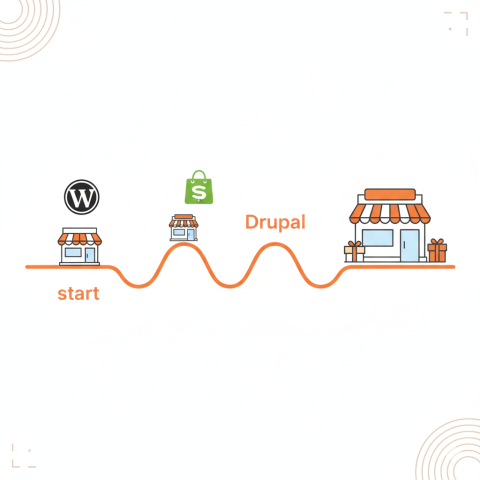
You're not alone. Most online stores start small—with platforms like WordPress or Shopify—but as sales grow, cracks start to show. Hidden fees, rebuilds, and tech bottlenecks start eating into your momentum.
If you're running an online store that's hit six figures—or aiming to—this guide will help you avoid platform pitfalls and plan for sustainable growth. We'll walk through the typical eCommerce platform journey, compare the pros and cons of major options, and explain why more businesses are switching to Drupal when they're ready to scale.
The E-Commerce Growth Pyramid
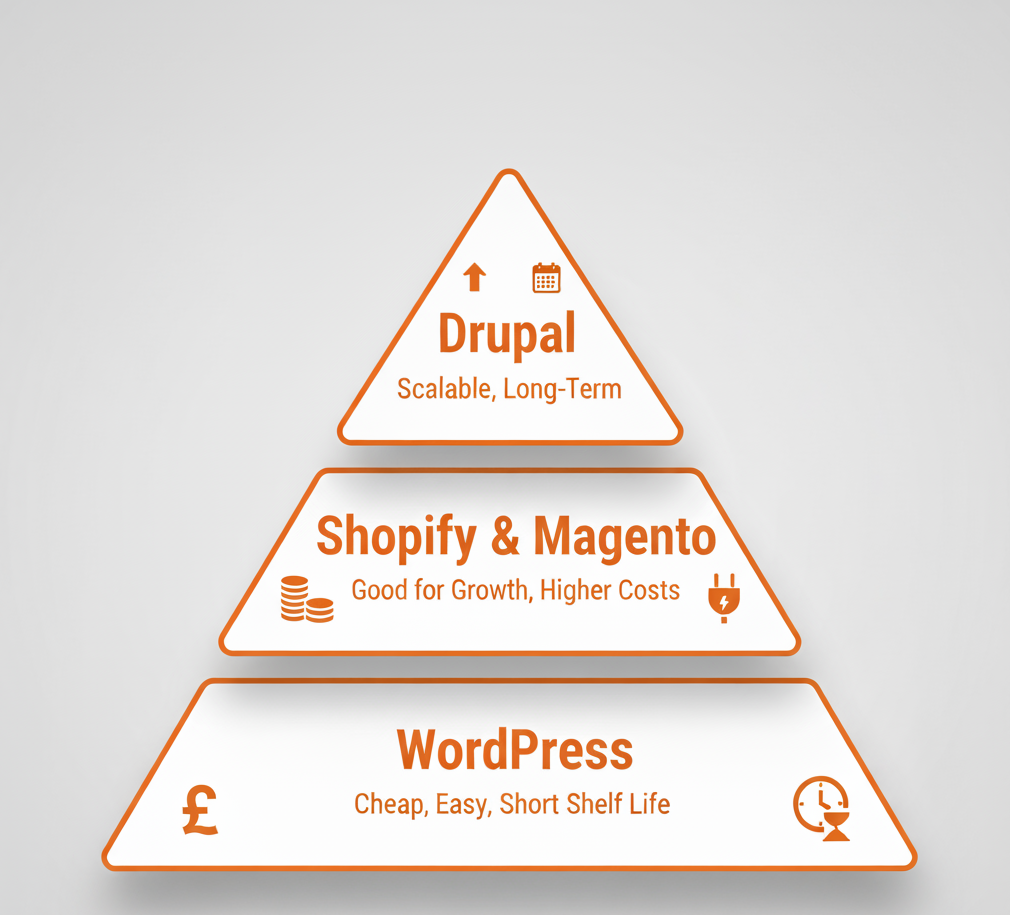
Most e-commerce sites follow a pattern. They start fast and cheap, then hit technical and financial walls just as growth begins to pick up. Here's how that usually looks:
Platform by Platform: What You're Getting Into
You've likely touched at least one of these platforms already. Here's what business owners often discover as they grow.
WordPress: Good Start, Short Shelf Life
Great for getting started on a budget, often built by someone in the family or a freelance developer. But the 'free' thing is a bit misleading. You'll quickly find yourself juggling plugin updates, dealing with compatibility issues, and worrying about security. Recent research shows that over 90% of hacked websites were WordPress-based, mostly due to outdated plugins.
Then there's the performance hit—each plugin you add slows things down, and with cart abandonment sitting at nearly 70% (slow checkouts being a major culprit), that's sales walking out the door. Most businesses find they've outgrown WordPress within 1–2 years.
Shopify: Easy Setup, Expensive to Scale
An easy option if you want to get selling fast. Setup is simple at £25/month for the Basic plan. But here's where it gets tricky: most successful stores end up spending £100–£1,575+ monthly once you add apps, themes, and factor in transaction fees.
To put that in perspective, with transaction fees of 2% + 25p per transaction on the Basic plan, a store doing £7,875 in monthly sales is paying around £182 just in transaction fees—that's before any apps or extras. Scale up to enterprise level, and you're looking at £15,750–£78,750+ monthly in platform costs alone. It makes long-term budgeting pretty unpredictable.
Magento: High Maintenance, Low Flexibility
Once the go-to for mid-sized online stores, Magento is now seen as heavy-going. It demands regular developer input, patches, and upgrades just to stay stable. For many businesses, that means higher running costs and a more technical platform to manage than they'd like.
Drupal: Built for Long-Term Growth
Who actually uses Drupal? When you look at the big players—Tesla, NASA, Oxford University, Nokia, even the British Royal Family, there's a pattern. They didn't pick Drupal because it was trendy. They picked it because when your website goes down, people notice.
Nearly 10% of the world's busiest websites run on Drupal, and there's a reason for that. While it might not have the flashy marketing of Shopify or the "anyone can build this" appeal of WordPress, Drupal quietly powers the sites that simply can't afford to break.
It's not the platform you choose when you're testing the waters, it's what you move to when you're ready to get serious about long-term growth.
What to Ask Before You Grow Further
If your current site feels more like a limitation than a launchpad, ask yourself:
- Are you spending more on plugins, apps, or transaction fees than you're getting in return?
- Will your current platform support your business 2–3 years from now?
- Do you have flexibility, or do you feel boxed in?
- Is your team working around the tech, or is the tech working for your team?
Where We Fit In
At Open Imagination, we work with businesses who've outgrown "starter sites." If you're finding your platform is holding you back, let's talk.
We help businesses migrate to Drupal Commerce when they're ready for something more stable, scalable, and built to last.
Book a free platform audit and we'll help you figure out if your current setup is still serving you or silently costing you more than it should.
Final Thoughts
There's no perfect platform. But there is a smart next step one that fits your growth goals.
If you're scaling, get serious about the tools you're using. The best platforms don't just power your store, they support your future.
What we do is simple: we listen. We take time to understand your business, how you sell, and what matters most to your customers. From there, we develop ideas and craft solutions that suit you, not the other way around.
About the author: With 16 years in hospitality behind him, George now works in web development, helping people make sense of tech and bring their ideas to life online.